Council Of Management Science & Technology

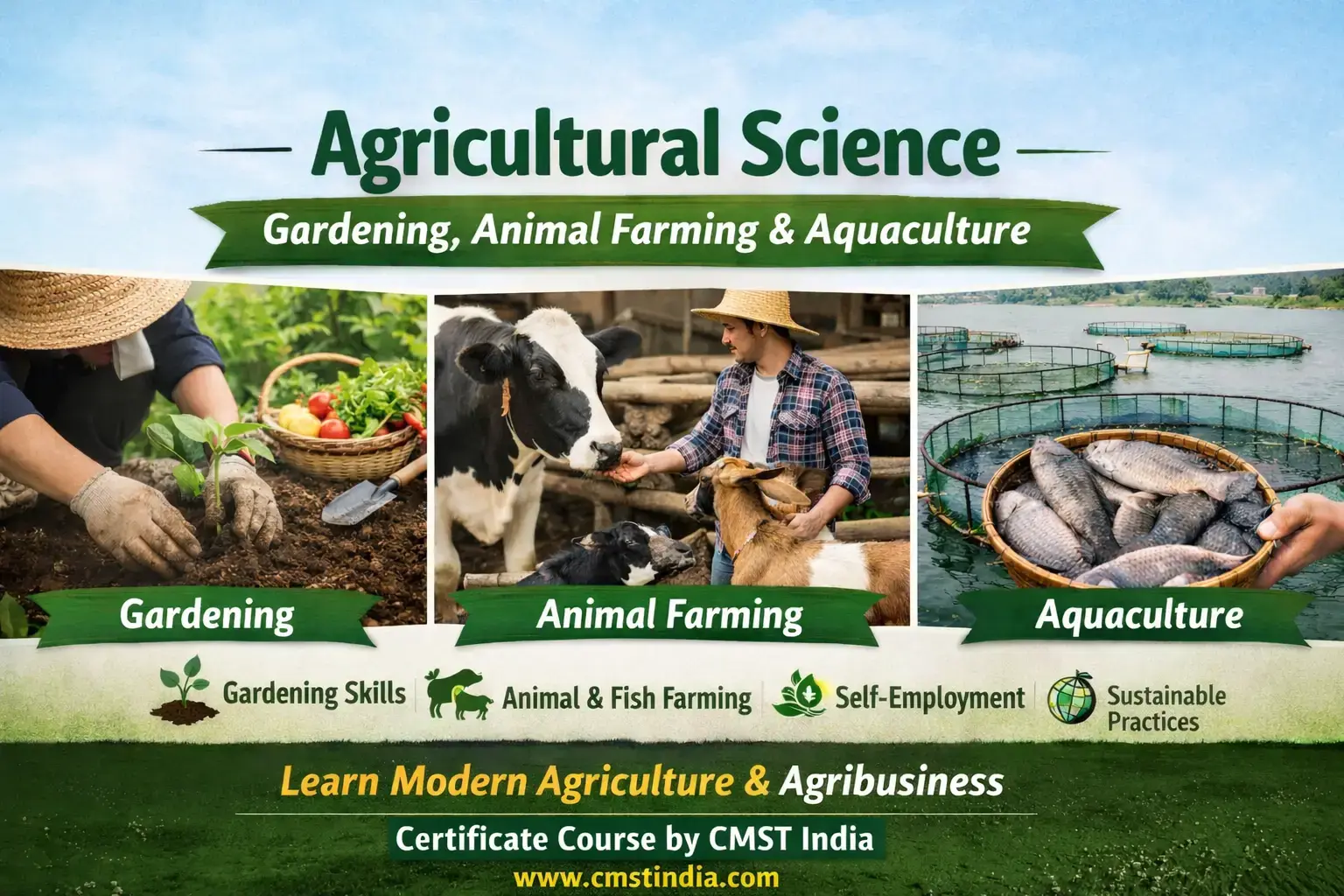
Agricultural Science – Gardening, Animal Farming & Aquaculture Course

- Description
- Curriculum
📘 Course Overview
The Agricultural Science – Gardening, Animal Farming & Aquaculture course is a practical and career-oriented program designed to provide fundamental to applied knowledge of modern agriculture, organic gardening, livestock management, and fish farming.
This course helps learners develop self-employment skills, agribusiness awareness, and sustainable farming practices suitable for rural, semi-urban, and urban environments.
🎯 Course Objectives
By the end of this course, learners will be able to:
-
Understand the basics of agricultural science and sustainability
-
Practice home gardening and commercial gardening methods
-
Apply scientific methods in animal farming and dairy management
-
Learn modern aquaculture and fish farming techniques
-
Explore agribusiness, organic farming, and income opportunities
-
Build practical skills for employment or self-enterprise
⏳ Course Duration
-
Flexible duration 1 Day
-
Suitable for online, offline, or hybrid learning modes
👨🎓 Who Can Join?
-
Students
-
Farmers & aspiring farmers
-
Self-employment seekers
-
Rural youth
-
Homemakers interested in gardening
-
NGO & community workers
-
Agriculture & dairy aspirants
No prior experience required.
🎯 Course Outcomes
Agricultural Science – Gardening, Animal Farming & Aquaculture
After successful completion of this course, learners will be able to:
-
Understand Agricultural Fundamentals
Explain basic concepts of agricultural science, soil management, climate impact, and sustainable farming practices. -
Apply Practical Gardening Skills
Plan and maintain home, kitchen, and small commercial gardens using proper soil preparation, composting, planting, and natural pest control methods. -
Perform Basic Animal Farming Operations
Manage livestock care including feeding, housing, hygiene, and basic disease prevention for dairy, poultry, goat, and other farm animals. -
Implement Aquaculture Techniques
Demonstrate fundamental fish farming practices such as pond preparation, water quality management, feeding, breeding, and harvesting. -
Adopt Modern & Sustainable Methods
Use eco-friendly approaches including organic farming, vermicomposting, water conservation, and integrated farming systems. -
Identify Agribusiness & Self-Employment Opportunities
Explore small-scale farming models, value addition, marketing basics, and entrepreneurship opportunities in agriculture and allied sectors. -
Develop Rural & Green Skills
Build hands-on skills for employment, community projects, and sustainable rural or urban agricultural development.
📜 Certification
Upon successful completion, learners will receive a
Certificate in Agricultural Science – Gardening, Animal Farming & Aquaculture
issued by Council of Management Science & Technology (CMST India).
🌟 Key Benefits
-
Skill-based & practical knowledge
-
Suitable for rural & urban learners
-
Supports self-employment & agribusiness
-
Awareness of modern sustainable methods
-
Strong foundation for agriculture-related careers
🚀 Start Your Agricultural Learning Journey
Learn how to grow, manage, and earn from agriculture with CMST India’s career-focused agricultural science program.
👉 Register Now: www.cmstindia.com
🎓 Skill Development | Self Employment | Sustainable Future
-
1
 Meaning and scope of agriculture
Agriculture is the science and practice of cultivating crops and rearing animals to produce food, fiber, and other useful products. It includes activities such as farming, gardening, animal husbandry, and aquaculture. The scope of agriculture is very wide, covering soil management, crop production, livestock care, fish farming, food processing, agribusiness, and sustainable practices. Agriculture not only provides food security but also creates employment opportunities and supports economic development and rural livelihoods.
-
2
Overview of gardening, animal farming & aquaculture
Gardening involves the cultivation of fruits, vegetables, flowers, and ornamental plants for home use or commercial purposes, focusing on soil preparation, planting, watering, and plant care. Animal farming deals with the rearing and management of livestock such as cows, buffaloes, goats, sheep, and poultry for milk, meat, eggs, and other products. Aquaculture refers to the scientific farming of fish and other aquatic organisms in ponds, tanks, or controlled water systems. Together, these three areas form important branches of agricultural science, supporting food production, self-employment, and sustainable rural and urban development.
-
3
Importance of agriculture in food security & economy
Agriculture is the primary source of food and plays a vital role in ensuring food security by providing cereals, fruits, vegetables, milk, eggs, meat, and fish for the growing population. It supports a balanced diet, reduces hunger, and maintains nutritional health. Economically, agriculture contributes significantly to national income, provides employment to a large portion of the population, supports agro-based industries, and promotes rural development. A strong agricultural sector ensures stable food supply, boosts exports, and strengthens overall economic growth.
-
4
Career and self-employment awareness
Agriculture offers wide career and self-employment opportunities in areas such as gardening, dairy and poultry farming, fish farming, organic agriculture, agribusiness, food processing, and farm management. With proper skills and knowledge, learners can pursue jobs, start small farming enterprises, or develop agro-based businesses. This awareness helps individuals understand income-generating possibilities, government support schemes, and sustainable livelihood options within the agricultural sector.
-
5
Soil types and soil preparation
Soil types such as sandy, clayey, loamy, and silt soils differ in texture, water-holding capacity, and fertility. Understanding soil types helps in selecting suitable crops and improving productivity. Soil preparation involves ploughing, loosening, leveling, and enriching the soil with organic matter and nutrients to create a healthy environment for seed germination and plant growth. Proper soil preparation improves aeration, moisture retention, root development, and overall crop yield.
-
6
Seed selection and planting methods
Seed selection involves choosing healthy, high-quality, and disease-free seeds to ensure good germination and strong plant growth. Proper planting methods such as correct depth, spacing, and sowing techniques help seeds develop healthy roots and shoots. Understanding seed quality and suitable planting practices improves crop survival, growth rate, and overall yield.
-
7
Home & kitchen gardening concepts
Home and kitchen gardening involves growing vegetables, fruits, herbs, and medicinal plants in home spaces such as backyards, terraces, balconies, or pots. It focuses on small-scale, low-cost cultivation to provide fresh, chemical-free food for daily use. This concept promotes healthy eating, self-sufficiency, environmental awareness, and efficient use of limited space while also offering small income and hobby opportunities.
-
8
Composting and organic manure
Composting is the natural process of converting kitchen waste, plant residues, and biodegradable materials into nutrient-rich organic manure. Organic manure improves soil fertility, structure, and water-holding capacity while promoting healthy plant growth. This eco-friendly practice reduces waste, supports sustainable agriculture, and decreases dependence on chemical fertilizers.
-
9
Watering methods & basic plant care
Watering methods include hand watering, drip irrigation, sprinklers, and traditional surface irrigation, each suited to different crops and spaces. Basic plant care involves proper watering, sunlight exposure, nutrient supply, weed control, pruning, and protection from pests and diseases. Correct watering and regular care promote healthy growth, strong roots, and better yield in gardening and farming.
-
10
Common vegetables, fruits & flowers
Common vegetables such as tomato, potato, spinach, okra, and cabbage; fruits like banana, papaya, mango, and lemon; and flowers such as rose, marigold, sunflower, and jasmine are widely grown in home gardens and farms. These plants are selected for their easy cultivation, nutritional value, market demand, and suitability for different climates. Learning about common crops helps beginners choose appropriate plants and manage them effectively.
-
11
Introduction to animal husbandry
Animal husbandry is the branch of agriculture that deals with the breeding, feeding, care, and management of domesticated animals such as cows, buffaloes, goats, sheep, and poultry. Its main purpose is to obtain useful products like milk, meat, eggs, wool, and manure while ensuring animal health and welfare. Animal husbandry supports food security, rural livelihoods, and agricultural sustainability.
-
12
Dairy, poultry, goat & sheep farming overview
Dairy, poultry, goat, and sheep farming are major branches of animal husbandry focused on the production of milk, eggs, meat, wool, and manure. Dairy farming deals with cows and buffaloes for milk production, poultry farming involves rearing birds for eggs and meat, while goat and sheep farming support meat, milk, and fiber production. These farming systems are important sources of nutrition, income, and self-employment, especially in rural and semi-urban areas.
-
13
Feeding and nutrition basics
Feeding and nutrition in animal farming involve providing balanced diets containing energy, protein, vitamins, minerals, and clean water to support healthy growth, reproduction, and production. Proper nutrition improves immunity, increases milk, meat, and egg yield, and helps prevent diseases. Understanding basic feeding practices is essential for maintaining healthy and productive livestock.
-
14
Animal housing and hygiene
Animal housing and hygiene involve providing safe, clean, and well-ventilated shelters along with proper sanitation to protect animals from disease, weather stress, and injury. Good housing ensures comfort, easy management, and efficient production, while proper hygiene practices such as regular cleaning, waste disposal, and disinfection help maintain animal health and improve productivity.
-
15
Disease prevention & welfare awareness
Disease prevention and welfare awareness focus on protecting animals from illness through proper vaccination, hygiene, nutrition, and regular health monitoring, while also ensuring humane treatment and comfort. These practices help reduce disease outbreaks, improve productivity, and promote the physical and mental well-being of animals, making livestock farming healthier, ethical, and more sustainable.
-
16
Production basics (milk, eggs, meat)
Production basics in animal farming involve understanding how milk, eggs, and meat are obtained through proper breeding, feeding, housing, and health care of animals. Efficient production depends on balanced nutrition, hygienic management, and disease prevention to ensure quality output, animal welfare, and profitable farming.
-
17
Introduction to aquaculture
Aquaculture is the scientific farming of fish and other aquatic organisms such as prawns and shellfish in ponds, tanks, or controlled water systems. It focuses on breeding, feeding, water quality management, and disease control to produce food sustainably. Aquaculture supports food security, income generation, and efficient use of water resources.
-
18
Types of fish farming (freshwater overview)
Freshwater fish farming involves the cultivation of fish in ponds, tanks, and reservoirs using controlled methods. Common freshwater fish farming systems include composite fish culture, monoculture, and integrated fish farming. Popular freshwater species such as rohu, catla, mrigal, tilapia, and catfish are raised for food and income. Freshwater aquaculture is widely practiced due to its low cost, easy management, and high production potential.
-
19
Pond/tank preparation
Pond and tank preparation involves cleaning, drying, liming, and fertilizing water bodies before stocking fish. These steps help remove harmful organisms, improve water quality, and create a healthy environment for fish growth. Proper preparation increases survival rate, reduces disease risk, and supports better fish production.
-
20
Fish feeding and growth cycle
Fish feeding and growth cycle involve providing balanced feed at different life stages to support healthy development from hatchlings to market-size fish. Proper feeding practices, along with good water quality, promote faster growth, better survival, and higher fish production. Understanding the growth cycle helps farmers manage feeding schedules, stocking density, and harvesting time effectively.
-
21
Water quality management
Water quality management involves maintaining proper oxygen levels, cleanliness, temperature, and pH of water to create a healthy environment for fish. Good water quality supports better growth, prevents diseases, and increases survival rate. Regular monitoring and timely management of water conditions are essential for successful and sustainable aquaculture.
-
22
Harvesting basics
Harvesting in aquaculture refers to the process of collecting mature fish from ponds or tanks at the right time and in a proper manner. Correct harvesting methods reduce stress and injury to fish, maintain product quality, and improve market value. Timely harvesting also helps in managing pond productivity and farm profitability.
-
23
Organic farming concepts
Organic farming is an agricultural system that uses natural inputs such as compost, green manure, bio-fertilizers, and biological pest control instead of synthetic chemicals. It focuses on soil health, ecological balance, and sustainable production of safe and nutritious food. Organic farming promotes environmental protection, farmer health, and long-term agricultural sustainability.
-
24
Vermicomposting
Vermicomposting is the process of producing nutrient-rich organic manure using earthworms to decompose biodegradable waste. It improves soil fertility, enhances plant growth, and supports eco-friendly and sustainable agriculture. Vermicomposting is widely used in home gardening, organic farming, and waste management.
-
25
Water conservation methods
Water conservation methods are practices used to save, manage, and efficiently use water in agriculture and gardening. Techniques such as rainwater harvesting, drip irrigation, mulching, and proper scheduling of watering help reduce water wastage, improve soil moisture, and support sustainable farming. These methods protect water resources and ensure long-term agricultural productivity.
-
26
Integrated farming system
An integrated farming system is an agricultural approach that combines two or more farming activities such as crops, livestock, fishery, and poultry on the same farm. It promotes efficient use of resources, recycling of farm waste, higher productivity, and stable income while supporting sustainable and eco-friendly agriculture.
-
27
Introduction to modern tools & technology
Modern tools and technology in agriculture include improved farm equipment, irrigation systems, greenhouse methods, sensors, and digital tools that help farmers increase efficiency, reduce labor, and improve productivity. These innovations support precision farming, better resource management, and sustainable agricultural practices.
-
28
Agriculture-based career options
Agriculture-based careers include opportunities in crop production, gardening, dairy and poultry farming, fish farming, organic agriculture, agribusiness, food processing, farm management, and agricultural services. These careers offer employment and self-employment pathways, supporting food systems, rural development, and sustainable economic growth.
-
29
Small business & self-employment models
Small business and self-employment models in agriculture include activities such as home gardening units, dairy and poultry farms, goat and sheep rearing, fish farming, organic vegetable production, vermicomposting, nursery management, and agro-product trading. These models require low to medium investment, can be started locally, and offer sustainable income opportunities through skill-based agricultural entrepreneurship.
-
30
Government scheme awareness
Government scheme awareness helps learners understand various central and state government programs that support agriculture, animal husbandry, fisheries, and rural entrepreneurship. These schemes provide benefits such as training, subsidies, loans, insurance, and technical guidance. Awareness of government schemes enables farmers and aspiring entrepreneurs to access financial support, reduce risk, and successfully start or expand agricultural and allied activities.
 Google